

-
60 mins
-
10 mins
-
30 mins
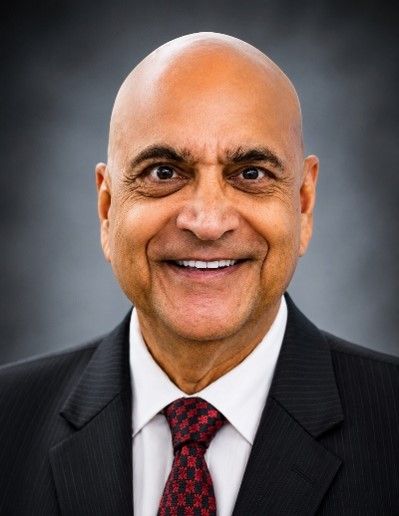
Dr. Ganesh Thakur is a distinguished energy executive, technology leader, and Distinguished Professor of Petroleum Engineering at the University of Houston, recognized for transforming technical innovation into business value, operational excellence, and strategic impact. A member of the U.S. National Academy of Engineering, he brings decades of global leadership across industry, academia, technology development, and major collaborations with governments and national laboratories.
-
90 mins
How rock typing, seismic interpretation, fractures and connectivity are translated into reservoir models. The session will test when additional geological detail improves sweep and remaining-oil predictions, and when it only adds complexity, including where AI-assisted interpretation adds useful evidence. Brazilian carbonate cases will be compared with Middle East experience.
Session chairs: Andriele Zambelli, BW Energy; Rafael Furuie, BW Energy
-
20 mins
-
90 mins
Different permeability fields, aquifer strengths and fault transmissibilities can match the same history but produce different forecasts. The session will examine ensemble conditioning, blind-period validation and forecast non-uniqueness. Machine-assisted and accelerated methods will be judged by computational saving, forecast quality and decision consistency.
Session chairs: Alexandre Emerick, Petrobras; Benedicte Vik Oanes, Equinor
-
60 mins
-
60 minsThe Technology Showcase is a special event at the workshop that offers a unique branding and marketing opportunity through sponsorship to reach a focused group of key decision makers in the oil & gas community. The Technology Showcase will consist of short presentations from each of the sponsoring companies and networking time.
-
90 mins
Surveillance has value when it separates competing reservoir explanations and changes an action. The session will examine pressure data, PLT, tracers, saturation logging, 4D seismic and fiber-optic sensing across reservoirs, wells and subsea infrastructure. Advanced analytics and AI-assisted interpretation will be assessed by false alarms, time gained and decisions changed.
Session chairs: Joao Baima, Shell; Rong Li, ExxonMobil
-
30 mins
-
90 mins
Well trajectory and completion architecture determine which reservoir volumes are contacted, bypassed or prematurely watered out. The session will consider long horizontals, inflow control, selective completions and intervention access under geological uncertainty. Computational optimization and surrogate methods will be assessed alongside physics-based screening using sweep and downside exposure.
Session chairs: Sule Gurses, SLB; Paulo Pires, Petrobras
-
60 mins
-
30 mins
-
90 mins
Improved injectivity may reflect better matrix entry, fracture extension or communication with an unintended interval. The session will combine pressure-transient analysis, injection logging, tracers and offset response to distinguish injectivity from sweep. Pattern recognition and machine-assisted diagnostics will be assessed alongside conventional interpretation against intervention outcomes.
Session chairs: Claudio Furtado, Petrobras; Hamid Emami-Meybodi, Penn State
-
30 mins
-
90 mins
CO2 reinjection can support pressure maintenance, displacement, gas management and long-term containment, each with different technical requirements. The session will examine plume behavior, recycle, compositional effects, surveillance and containment assurance. Reduced-order and accelerated optimization methods will be tested against compositional simulation for recovery, recycle and constraint compliance.
Session chairs: Elisabeth Undeland, Shell; Marcos Machado, Petrobras
-
60 mins
-
90 mins
The best reservoir action may lose value when gas handling, compression, water processing, export or backpressure constraints are included. The session will examine coupled reservoir, well, network and facility decisions and the cost of designing around a single forecast. Faster optimization and decision-support methods will be judged by realized production, stability and implemented recommendations.
Session chairs: Muhammad Navaid Khan, ADNOC; João Baima, Shell
-
30 mins
-
90 mins
Late-life decisions must balance smaller remaining targets against intervention uncertainty, infrastructure condition, operating cost and abandonment timing. The session will examine infill, workover, waterflood reconfiguration, asset transfer, life extension and decommissioning using Campos and international cases, including the studies, integrity evidence and regulatory requirements needed for life extension. Predictive analytics may support intervention and integrity decisions, while digital programs that failed to repay their cost will also be reviewed.
Session chairs: Luciana Gusmão Freire, Equinor; Manoel Farias, PRIO