
Technical Program
-
30 mins
-
30 mins
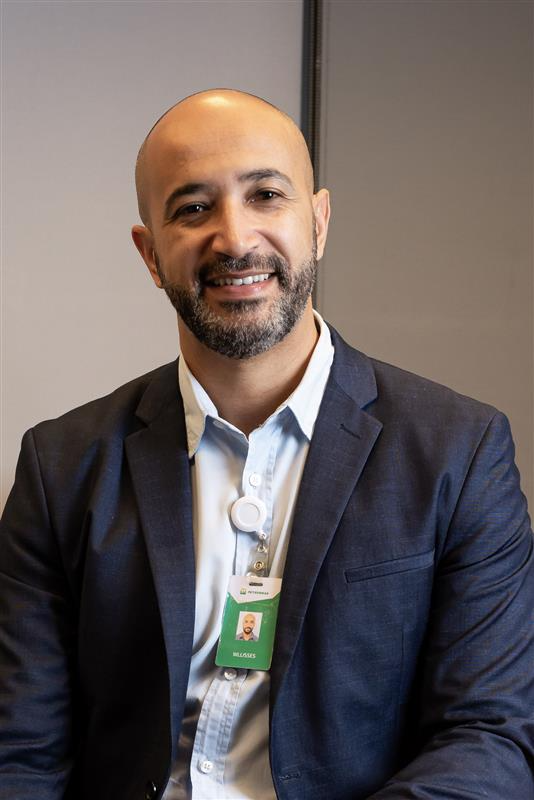
About Wllisses Menezes Afonso
Wllisses is a Civil Engineer with a master’s degree in Structures, an MBA in Business Management, and a specialization in Petroleum Engineering. With over 20 years of experience in the oil and gas industry, he joined Petrobras in 2004 and has held leadership roles across Wells Design and Services, Production Units, and Project Management. He is currently Head of Drilling and Wells at Petrobras, focusing on strengthening safety and well integrity while fostering collaboration and performance with service partners to support the long-term development of the Drilling and Wells segment in Brazil and globally
-
90 mins
Session Chairs: João Paulo Sanseverion Abdu, Petrobras; Andres Gibson, Darcy Partners
This session will bring together professionals to share lessons learned from drilling campaigns across Latin America and the Caribbean. Through real-world case studies, participants will discuss operational challenges, successful practices, technology applications, and decision-making processes in diverse geological and business environments. The session aims to foster knowledge exchange and highlight regional experiences that can be applied to future projects.
-
30 mins
-
90 mins
Session Chairs: Luis Carlos de Souza Junior, Petrobras; Thiago Oliveira, Shell
Geomechanical uncertainty remains a key factor influencing drilling performance and well integrity. This session will present case studies involving wellbore stability, pore pressure prediction, lost circulation, fault-related challenges, stress characterization, and reservoir deformation. Experts will discuss how geomechanical understanding contributed to risk mitigation and improved outcomes in different geological settings throughout the region.
-
90 mins
-
90 mins
Session Chairs: Jose Abud, Halliburton; Alessandro Pasini, Foresea
Continuous improvement is essential for delivering safer, faster, and more cost-effective wells. This session will explore opportunities to optimize drilling campaigns through better planning, operational execution, data utilization, multidisciplinary collaboration, and performance monitoring. Attendees will discuss lessons learned from past campaigns and practical approaches for enhancing efficiency and value creation.
-
30 mins
-
60 mins
Session Chairs: Thiago Pessoa, Equinor; Sergio Fontoura, PUC-Rio / ISRM
Geohazards represent some of the most significant risks encountered during well planning and drilling operations, ranging from shallow gas pockets and hydrate zones to active faults, subsidence areas, and unstable seafloor conditions. This session will focus on best practices for identifying, characterizing, and modeling geohazards through the integration of seismic data interpretation, petrophysics and geomechanical analysis. Experts will share methodologies for incorporating geohazard findings into well design and operational procedures, with the goal of minimizing risk exposure while preserving operational efficiency.
-
30 mins
-
90 mins
Session Chairs: Felipe Terra, Petrobras; Jhoao Villabona, Ecopetrol
Geomechanics plays a fundamental role in maintaining well safety throughout the well lifecycle. This session will examine the interaction between geomechanical processes and well barrier integrity, addressing topics such as fracture containment, casing design, cement performance, stress changes, and abandonment barriers. Participants will discuss how multidisciplinary approaches can strengthen risk management and long-term well integrity.
-
30 mins
-
90 mins
Session Chairs: Kent Torbett, ExxonMobil; Leonardo Nascimento, NOV
Automation and robotics are reshaping drilling operations by improving consistency, safety, and efficiency. This session will explore current and emerging technologies, including automated drilling systems, robotic pipe handling, remote operations, and autonomous workflows. Industry experts will discuss implementation experiences, operational benefits, workforce implications, and the future role of automation in well construction.
-
90 mins
-
60 mins
Session Chairs: Wallace Tuler, SLB; Eduardo Toledo; UFAL
Digital technologies are increasingly supporting drilling planning, execution, and performance optimization. This session will cover the use of advanced analytics, artificial intelligence, real-time monitoring systems, digital twins, cloud-based platforms, and integrated subsurface models. Participants will discuss how digital tools are helping teams improve decision-making, reduce uncertainty, and enhance collaboration across disciplines.
-
30 mins
-
60 mins
Session Chairs: Vivian Marchesi, Baker Hughes
Well construction projects face a wide range of geological, operational, technical, and economic challenges. This session will provide a forum for discussing key issues encountered during the planning and execution of wells, including drilling performance, geomechanical uncertainty, well integrity, cost control, and emerging technologies. The objective is to share experiences and identify practical solutions that support safe and efficient well delivery.