
-
Blake's Bistro60 mins
-
Grand Ballroom Foyer60 mins
-
Grand Ballroom A/B30 mins
-
Grand Ballroom A/B210 mins
As the oil and gas industry faces stiffer competition from new power sources, understanding how well construction decisions influence asset performance, sustainability, and economic returns is more crucial than ever. This session aims to be a foundation for the rest of the Forum by providing a comprehensive overview of contemporary practices, key advancements, and the diverse factors shaping outcomes across the well lifecycle in current operations.
This session will try to describe the impact of variations in our operating models on well lifecycle outcomes. We will start by examining common events that limit well lifecycle value, then work our way backwards to describe how elements of our operating model contribute to the destruction of well lifecycle value. We aim to structure this examination alongside operating contrasts such as small versus large operators, conventional versus unconventional resources, brown field versus green field, global versus regional practices, well type, and more.
The goal of this first session is to arrive at a description of the current state of well construction and its impact on well lifecycle value framed along a schema of industry classifiers.
Session Managers


-
Grand Ballroom Foyer30 mins
-
Blake's Bistro60 mins
-
Grand Ballroom A/B240 mins
One of our industry’s greatest challenges is the low ultimate recovery we achieve over the lifetime of conventional (recoveries of ~35%) and unconventional (recoveries of ~10%) oil reservoirs. This is a major impairment to economic success.
Another challenge is often a lack of boldness. For example, while a decade of fracing (hydraulic fracturing) shale wells has delivered a 2.5x well production boost at a 20% reduction in the original well cost, this improvement has only been achieved incrementally. A second example, conventional field development often leaves the reservoir behind through early economic decisions that reveal themselves later - limited data, well design choices, short horizon infrastructure choices, or production sequencing.
In this session, we give participants the opportunity, verbally and interactively, to discuss bold ideas that can help deliver Big Hairy Audacious Goals ( BHAGs). For example, discussions could include:
- what conditions are necessary to meet these challenges?
- what are the big levers that need to be pulled to achieve a bolder outcome?
- how will these challenges evolve with time as energy market strategies change for integrated oil companies (IOCs), national oil companies (NOCs), mid-size companies, and independents?
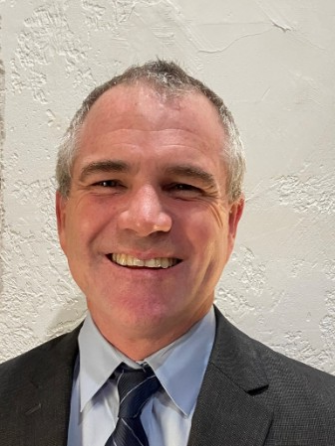
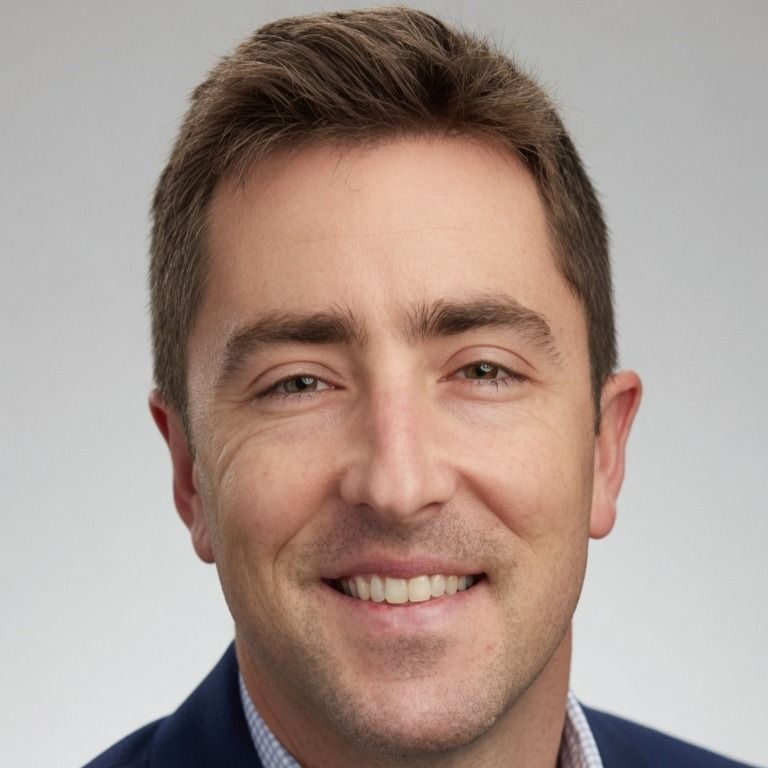
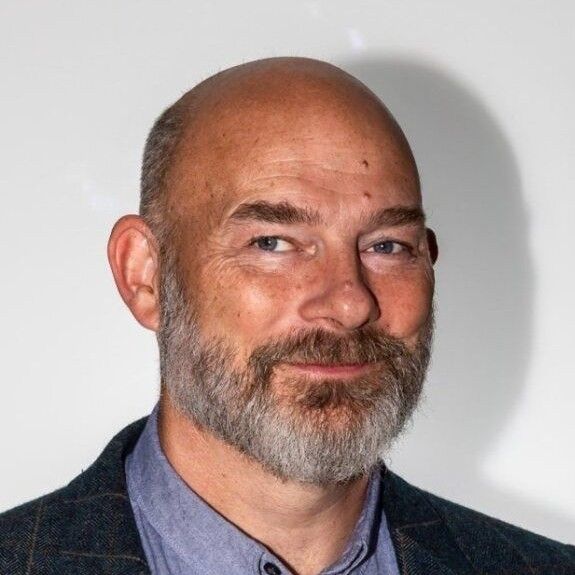
Session Managers

-
Grand Ballroom Foyer30 mins
-
Poolside90 mins
-
Blake's Bistro60 mins
-
Grand Ballroom A/B240 mins
While identifying big levers and bold future aspirations is essential, realizing their value is far more challenging. Big levers rarely operate in isolation. They belong to interconnected technical, organizational, digital, execution, and assurance systems whose interactions ultimately determine well lifecycle outcomes.
This session examines how early well construction and concept decisions propagate across the lifecycle, influencing drilling and completion performance, production recovery, intervention flexibility, and ultimately abandonment complexity and extended liability. By mapping "system of systems" interactions, the discussion focuses on where value is created, constrained, or irreversibly locked in.
Questions to consider include:
- How do these systems interact across different operating contexts—major and independent operators, regions, well types, completion techniques, production enhancements, and increasing automation?
- Where do interdependencies amplify value, and where does fragmented optimization erode it?
- What must be integrated—and what must fundamentally change—to translate bold ideas into sustainable, lifecycle-wide value?
Session Managers


-
Grand Ballroom Foyer30 mins
-
240 mins
-
Grand Ballroom A/B240 mins
From well concept through abandonment, transformative workflows will improve lifecycle value by shifting decision-making earlier, explicitly managing uncertainty, leveraging digital technologies, and integrating across disciplines to maximize wellbore lifecycle value, in a safe manner, and in compliance with governing laws and regulations.
Today’s wellbore construction (WC) workflows prioritize cost and execution, while future workflows must prioritize lifecycle value, safety, and optionality for real-time decision-making, which can result in lost value due to early decision lock-in, reactive uncertainty management, and poor information transfer between organizational areas. Future wellbore construction engineers (WCEs) should evolve from well deliverer to lifecycle value architect, emphasizing probabilistic thinking, systems engineering, and human–AI collaboration.
Participants will propose transformative workflow shifts that improve lifecycle value, and leave with a clearer vision of future drilling WCE workflows, a shared understanding of where current practices limit lifecycle value, and practical ideas that SPE members can begin applying immediately in the planning & execution workflow process optimization and technology adoption.
Session Managers




-
Grand Ballroom C/D30 mins
-
Blake's Bistro60 mins
-
Grand Ballroom A/B540 mins
Well construction responsibility is a continuous value stream from scoping concepts, through planning and execution to abandonment. Yet in practice, we are still constrained by silos that fragment decisions, data, and accountability in this cycle. The challenge is not that these silos exist. We have been actively challenging them for years, but they continue to persist despite our efforts. Today, that tension is becoming more visible.
This is a dual session - a focus on organization and a focus on technology. Each portion of the session will open a different lens on the same challenge, examining how structures, roles, and decision flows influence integration, and how data, platforms, and AI are reshaping what can be achieved. Setting the stage for a joint discussion on where these paths converge and where they may conflict.
Individually, these sessions will surface different perspectives. Together, they will create a single, combined view and an integrated perspective to highlight the areas of focus that will enable a more integrated, adaptive, and value-driven lifecycle well construction.
Join this discussion as we challenge conventional thinking. Discussions could include:
- Are we truly breaking down silos, or just redesigning them?
- What balance between organizational design and technology could transform well construction?
Session Managers




-
Grand Ballroom Foyer30 mins
-
Blake's Bistro60 mins
-
Grand Ballroom Foyer30 mins
-
Poolside and Grand Ballroom C/D150 mins
-
Blake's Bistro60 mins
-
Grand Ballroom A/B240 mins
Despite continuous advances in drilling, completions, and digital technologies, lifecycle value in well construction continues to leak in ways the industry does not fully understand or consistently address. This Forum brings together operators, service providers, and technology leaders to examine that gap—and to challenge the assumptions embedded in how wells are planned, delivered, and managed over time.
Session 6 brings the Forum together to integrate structured outputs from Sessions 1 through 6 into a coherent system-level understanding of how lifecycle value in well construction is created, degraded, or lost.
Rather than recapping individual discussions or proposing solutions, the session will focus on identifying the patterns, tensions, and structural drivers that consistently shape outcomes across the lifecycle. This discussion includes examining how decisions made in one phase fail to persist into the next, how contracts and key performance indicators (KPIs) influence behavior, and how operating models and handoffs affect accountability and continuity over time.
The session will connect insights across technical, organizational, commercial, and digital dimensions to surface a small number of integrated observations that clarify root causes rather than symptoms. Particular attention will be given to areas of divergence and unresolved tension, where differing perspectives highlight fundamental trade-offs within the system.
This session will not produce a formal set of recommendations or a defined roadmap. Instead, it will establish a clearer shared understanding of how the industry is operating, along with the key conditions and dependencies that must be addressed for lifecycle value to be more consistently preserved.
Participants will leave with a more precise language for discussing lifecycle value, a sharper set of mental models for interpreting system behavior, and a stronger foundation for evaluating potential changes within their own organizations.Session Managers



-
Grand Ballroom Foyer30 mins